

WINNIPEG, Canada — November 28, 2026 — Life Assure has released a guide describing the cellular infrastructure that carries emergency signals from Life Assure medical alert devices Canada households use. The guide covers cell tower coverage, automatic network switching, rural network expansion, and redundant monitoring centre connections.
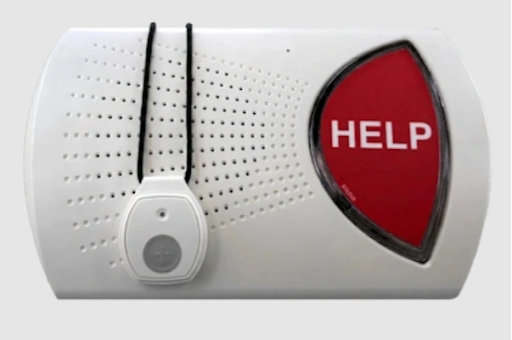
The guide starts from the position that a medical alert device depends on the network carrying its signal. Each press of an emergency button relies on a chain of cell towers, carriers, and switching systems that typically receives little attention from the people using the device. The publication describes that chain in plain terms. It follows a signal from the moment a button is pressed to the moment it reaches a monitoring facility.
Canada’s geography is central to the guide’s subject. The country ranges from urban centres to small towns to long stretches of rural highway where coverage has historically been limited. The guide notes that one in four seniors in Canada lives alone, according to Statistics Canada, and that this proportion rises with age. That context places added weight on the connection between a household and its monitoring service.
The guide explains that medical alert systems rely on the same physical network of cellular towers used by ordinary mobile phones. By the end of 2024, more than 90 percent of Canadians had access to LTE coverage, and carriers have continued to extend their networks into smaller towns and along highways. According to the guide, this breadth of coverage allows Life Assure medical alert devices Canada residents use in small communities to operate on the same infrastructure as devices in large cities, since cell towers do not distinguish between addresses.
The publication observes that this network is easily taken for granted in cities such as Toronto and Vancouver. It becomes a more pressing consideration for families whose parents live in smaller communities in Manitoba or Quebec. The guide describes tower coverage as the foundation of the system, allowing a device to keep working when its wearer moves or travels within the country.
No single carrier covers every square kilometre equally, so the guide explains that devices are designed to move between networks when a signal weakens. Rather than remaining locked to one provider, a unit scans for the strongest available tower and switches automatically, without any action from the wearer. The guide identifies the edges of coverage zones as the place where this matters most, since one carrier may have a strong signal where a neighbouring provider barely registers. Under older single-carrier designs, a dead zone for one provider meant a dead zone for the entire device, even when another network was operating nearby.
The guide also addresses rural and remote coverage, which it describes as an engineering challenge shaped by distance. Many older adults who choose to remain in their homes live in the countryside, away from larger towns, where towers are spaced farther apart. Federal regulators have set coverage targets that include the population and major highways. The guide notes that as more fibre lines become available and more towers are built along highways, the difference between an alert system operating in a city and one operating in a rural area narrows.
The receiving end of the connection is examined as well. The guide states that coverage at the device resolves only half of the issue, because the signal requires a stable destination. Monitoring stations typically operate over multiple connections, so the failure of a single link does not take the service offline. For a household using a Life Assure device, the call travels from the pendant through a cell tower to a monitoring facility. That facility is built to remain online during power outages, network congestion, or hardware failures. The guide describes this layered redundancy on both ends of the connection as the element that turns a single cellular signal into a functioning emergency service.
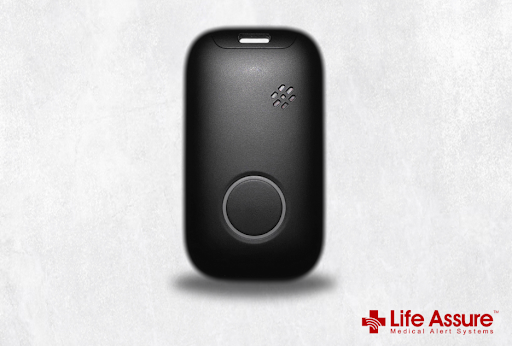


The final section of the guide brings these layers together. Tower coverage provides connectivity, and automatic switching maintains it as conditions change. Rural investment addresses gaps in service, and redundant monitoring centres keep a responder connected at the other end. The guide describes each layer as compensating for the limitations of the others.
The publication also addresses mobility between provinces. It explains that the combined infrastructure allows a device purchased in one province to function in the same way when its owner moves, travels, or divides time between homes in different provinces. In this arrangement, the device operates more like a national service than a local one, regardless of how long a person remains in one place.
The guide concludes that attention often centres on the pendant itself, but the system depends on the network behind it. Cell tower technology, automatic switching, and redundant monitoring connectivity together turn a one-button device into a service that functions in a downtown core and in remote areas alike. The document gives consumers a description of the network infrastructure that supports the medical alert service Life Assure provides to households across Canada.
About Life Assure
Life Assure provides medical alert devices and monitoring services to households in Canada. Its devices connect through national cellular networks to monitoring facilities designed to remain online during power outages, network congestion, and hardware failures. The company’s devices are built to switch automatically between carrier networks to maintain a connection in both urban and rural areas.
Media Details
Contact Person: Media Relations
Company Name: Life Assure
Email: contact@lifeassure.com
Distributed By: Pulsebulletin.com