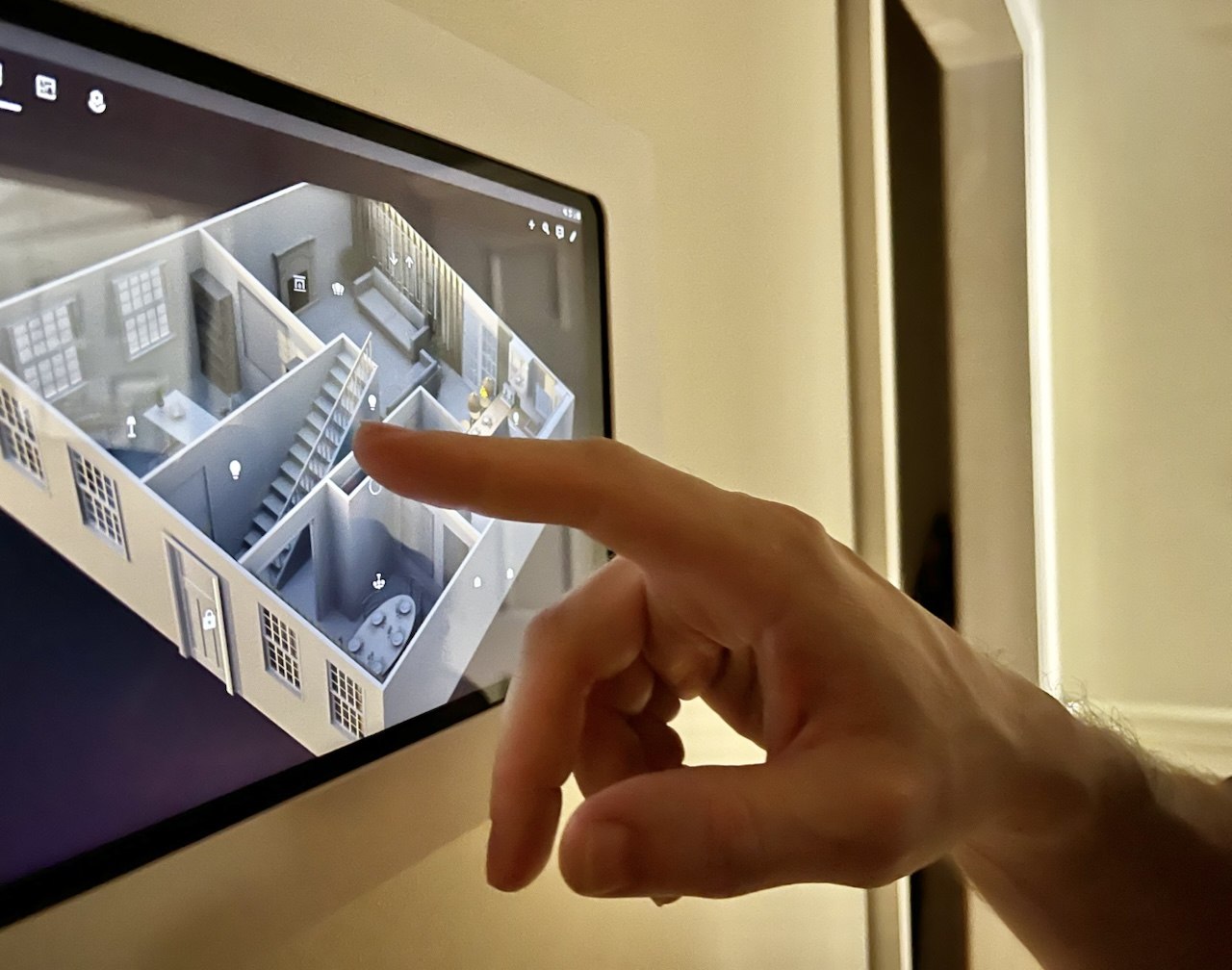
As more homes adopt connected technology, system planning is emerging as a key factor in usability, reliability and long-term experience.
HERSHEY, PA, UNITED STATES, April 29, 2026 /EINPresswire.com/ — As renovation activity increases across Central Pennsylvania this spring, homeowners continue to invest in lighting, shades, controls, climate systems, and connected devices to improve comfort and modernize their homes. These upgrades reflect a broader shift in expectations: a modern home is increasingly defined not only by its finishes, but by how it functions in everyday life.
At the same time, Nestology, a Hershey-based smart home design and integration firm, says many renovation projects reveal a consistent gap between adding technology and designing how that technology works together cohesively.
According to the company, the difference between a renovation that feels seamless and one that becomes difficult to manage often comes down to whether upgrades are planned as part of a unified design strategy.
“The issue is not that homeowners are choosing the wrong products,” said Paul Belevich, engineering lead at Nestology. “Most decisions are thoughtful. The challenge is that many upgrades are still implemented one device at a time, without a clear plan for how the home should behave as a consistent system.”
Nestology reports that in approximately eight out of ten post-installation projects it evaluates, the underlying issue is not hardware quality but integration. This does not apply to every project, but the pattern appears consistently. Lighting, shading, and control systems may function individually, yet the overall experience becomes less predictable once these elements are used together.
This pattern becomes more visible after renovations are complete, when initial expectations meet real-world usage. For example, a homeowner may control lighting, shades, and climate through separate apps, each with its own logic and response time. While each component functions on its own, the combined experience can become harder to navigate in daily use.
“What feels simple at the time of purchase does not always translate into simplicity in daily life,” Belevich added. “A home can technically function, but still require more attention than expected. That is often a sign that the underlying system was not fully designed.”
Several issues tend to appear repeatedly in post-renovation projects:
– Multiple apps for lighting, shades, climate, security, and audio, making everyday control less intuitive
– Cloud-dependent features that may lose functionality during internet outages or service changes
– Automations that behave inconsistently across rooms and systems
– Ongoing subscription costs that were not fully anticipated during installation
– Increased reliance on multiple third-party services for connected devices
These challenges are rarely caused by a single decision. Instead, they tend to develop gradually as homes evolve through a series of upgrades.
“Most homes are not built as unified setups,” said Vera Solo, designer at Nestology. “They develop step by step — a fixture replaced here, a control added there, a new system introduced later. Each decision makes sense on its own, but over time, the overall experience can become less cohesive.”
One area where this dynamic is particularly noticeable is home security. While connected cameras and access systems are often installed to improve safety, homeowners are sometimes surprised to learn how many external services may be involved in storing or processing that data when different technologies are combined without a coordinated plan.
These patterns reflect a broader shift in how renovation outcomes are evaluated. As connected technology becomes more common, homeowners are placing greater emphasis not only on aesthetics, but on predictability, ease of use, and long-term reliability. The goal is not to reduce technology, but to ensure it works as part of a coherent and predictable environment.
Based on these patterns, homeowners may consider several questions before making connected upgrades:
– Can the home’s network and power infrastructure support these technologies reliably?
– Will core functions continue to operate if the internet is unavailable?
– Is there a clear control strategy across the home?
– What long-term costs will remain after installation?
– Will the overall setup remain intuitive?
These considerations are becoming increasingly relevant as connected technology becomes a standard part of home renovation decisions.
To address these challenges, projects are typically approached from a system design perspective, focusing on how the home performs in real-world use over time rather than on individual products alone.
“The best renovation is not the one with the most technology,” Belevich said. “It is the one that works consistently, feels natural to use and continues to make sense long after the project is finished.”
About Nestology.pro LLC
Nestology Pro is a Hershey, Pennsylvania-based smart home design and integration studio. The company takes an engineering-driven, system-first, and vendor-independent approach to lighting, shading, networking, control, and home technology, with a focus on predictable system behavior, local-first reliability, and long-term usability.
Nestology.pro
Central PA smart home design studio
+1 717-298-7889
contact@nestology.pro
Visit us on social media:
LinkedIn
Instagram
Facebook
Other
Legal Disclaimer:
EIN Presswire provides this news content “as is” without warranty of any kind. We do not accept any responsibility or liability
for the accuracy, content, images, videos, licenses, completeness, legality, or reliability of the information contained in this
article. If you have any complaints or copyright issues related to this article, kindly contact the author above.

Media gallery