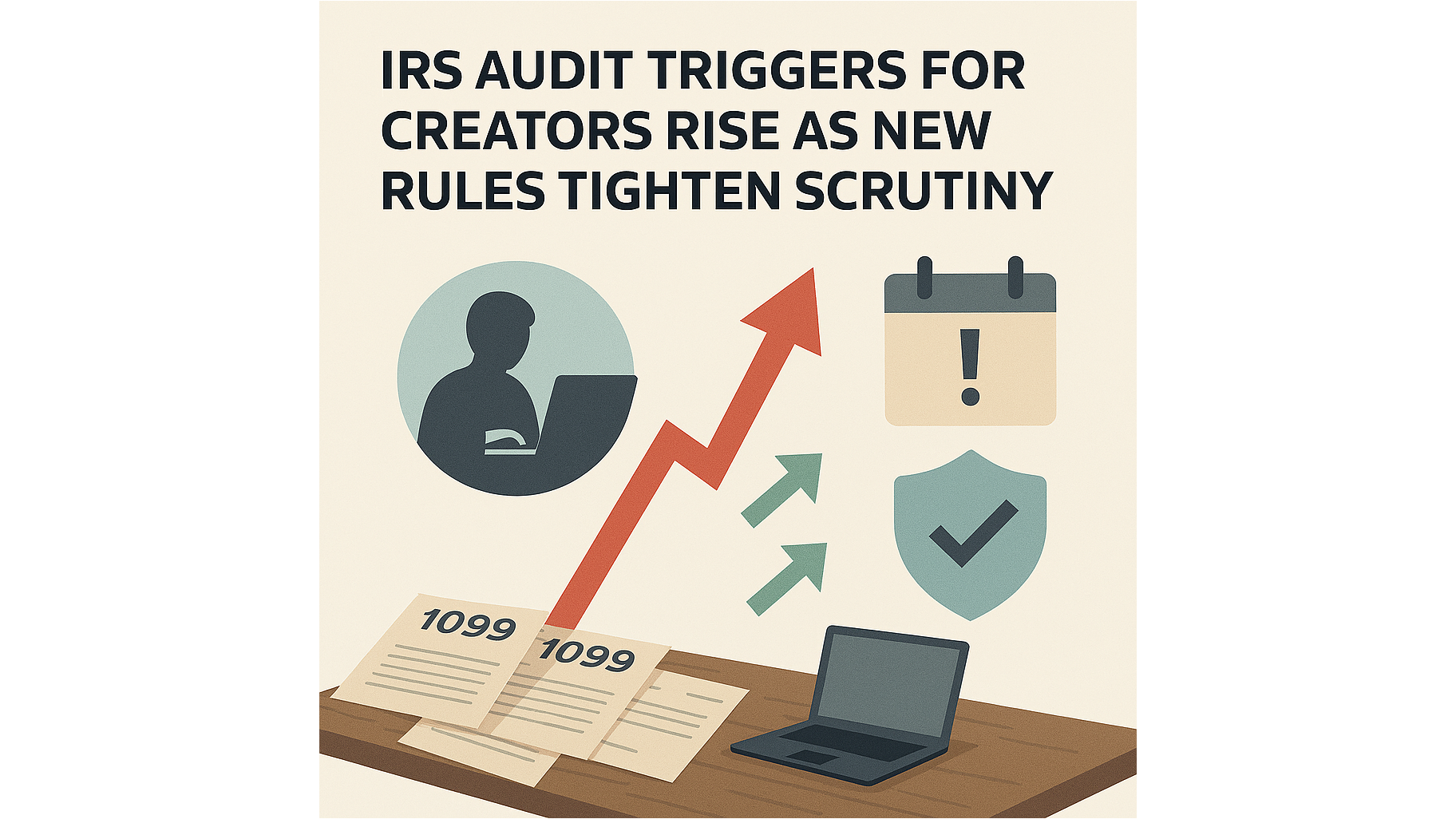
Charlotte, N.C. — The IRS is intensifying its oversight of content creators, freelancers, and independent digital workers as new compliance systems expand across online income platforms. The shift marks one of the most significant enforcement escalations targeting self‑employment income in more than a decade, driven by rapid growth in the creator economy and rising concerns about underreported digital earnings.
Creator Income Under Increased IRS Scrutiny
The creator economy has expanded at an unprecedented pace, with millions of individuals earning revenue from YouTube, TikTok, Instagram, Twitch, Patreon, and other digital platforms. As income sources multiply, reporting accuracy has become more difficult, leading to a surge in IRS attention.
Recent enforcement updates show that creators are now among the fastest‑growing groups flagged for income‑mismatch reviews. These reviews occur when reported income does not align with data submitted by platforms, advertisers, payment processors, or brand‑deal intermediaries. The IRS has identified fragmented reporting as a major contributor to filing discrepancies, especially for creators earning through multiple channels.
Industry analysts note that creators earning between $30,000 and $150,000 annually are experiencing the steepest rise in audit selection rates. This group often receives several 1099‑NEC and 1099‑K forms each year, increasing the likelihood of mismatches and automated review triggers.
Creators facing IRS notices, CP2000 letters, or audit concerns can schedule a support meeting at https://LienFreeNow.com.
Why the IRS Is Increasing Enforcement
Several factors are driving the IRS’s expanded focus on digital workers:
1. Growth of Multi‑Platform Income
Creators frequently earn from:
- Sponsorships
- Brand deals
- Affiliate programs
- Ad revenue
- Membership platforms
- Merchandise sales
- Digital product marketplaces
Each income stream may issue separate tax documents, creating opportunities for reporting inconsistencies.
2. Lower Reporting Thresholds
Recent changes to 1099‑K reporting rules have dramatically increased the number of creators receiving tax forms from payment processors and marketplaces. Even small transactions can now generate a reportable event.
3. Automated Income‑Matching Technology
The IRS has deployed advanced systems that compare creator‑reported income with third‑party data. When discrepancies appear, the system automatically flags the return for review or generates a CP2000 notice.
4. Machine‑Learning Audit Filters
New audit algorithms analyze patterns such as:
- Missing or duplicate 1099 forms
- Large year‑over‑year income swings
- Inconsistent quarterly tax payments
- Unusual expense ratios
These filters are designed to identify underreported self‑employment income more efficiently.
Impact on Independent Digital Workers
The increased enforcement has created new administrative challenges for creators. Industry surveys show that more than 60% of full‑time creators now receive income from four or more platforms, complicating bookkeeping and tax preparation.
Common issues include:
- Missing 1099 forms
- Incorrect payout classifications
- Platform dashboards not matching official tax documents
- Late or corrected forms issued after filing
- Difficulty reconciling international payments
Even minor discrepancies can trigger an automated IRS review under the updated system.
Creators seeking help with income mismatches, audit notices, or CP2000 letters can schedule a consultation at https://LienFreeNow.com.
How Creators Can Reduce Audit Risk
Tax professionals recommend several strategies to reduce the likelihood of IRS scrutiny:
1. Maintain Detailed Income Logs
Creators should track payouts from every platform, including sponsorships, affiliate networks, and merchandise providers.
2. Reconcile Platform Dashboards Monthly
Dashboard totals often differ from official 1099 forms. Monthly reconciliation helps identify discrepancies early.
3. Track All 1099‑NEC and 1099‑K Forms
Creators should verify that all expected forms arrive and match internal records.
4. Use Accounting Tools Designed for Self‑Employed Earners
Modern bookkeeping software can automate income categorization and reduce reporting errors.
5. Monitor IRS Transcripts
Transcript monitoring can detect IRS activity before formal notices are issued.
Industry Response to Rising Audit Pressure
Financial‑technology firms and advisory groups have launched new tools to help creators manage compliance. These include:
- IRS transcript monitoring
- Early‑warning alerts for mismatches
- Automated income‑tracking dashboards
- Audit‑risk scoring systems
Demand for these services has grown significantly since mid‑2025 as creators seek proactive protection against unexpected IRS correspondence.
IRS Emphasizes Accuracy, Not Punishment
IRS officials state that the updated compliance measures are intended to improve accuracy in sectors where underreporting has historically been widespread. The agency has increased educational outreach and early‑intervention notices to help taxpayers correct issues before audits occur.
However, analysts expect elevated audit rates for digital workers to continue through at least 2027 as enforcement algorithms evolve and additional third‑party data sources are integrated.
The Road Ahead for Content Creators
With the global creator economy projected to exceed $500 billion by 2027, tax specialists anticipate ongoing scrutiny of digital income streams. As reporting rules tighten, structured compliance support will become essential for creators managing multi‑platform revenue.
Creators experiencing IRS notices, CP2000 letters, or audit concerns can access guidance and schedule a meeting at https://LienFreeNow.com, which provides support for resolving tax challenges affecting independent digital workers.
MEMBCO TAX
info@membcotax.com
+1 800 925 7133
2108 South Blvd, Suite 211 #1012
Charlotte
North Carolina
28203
United States