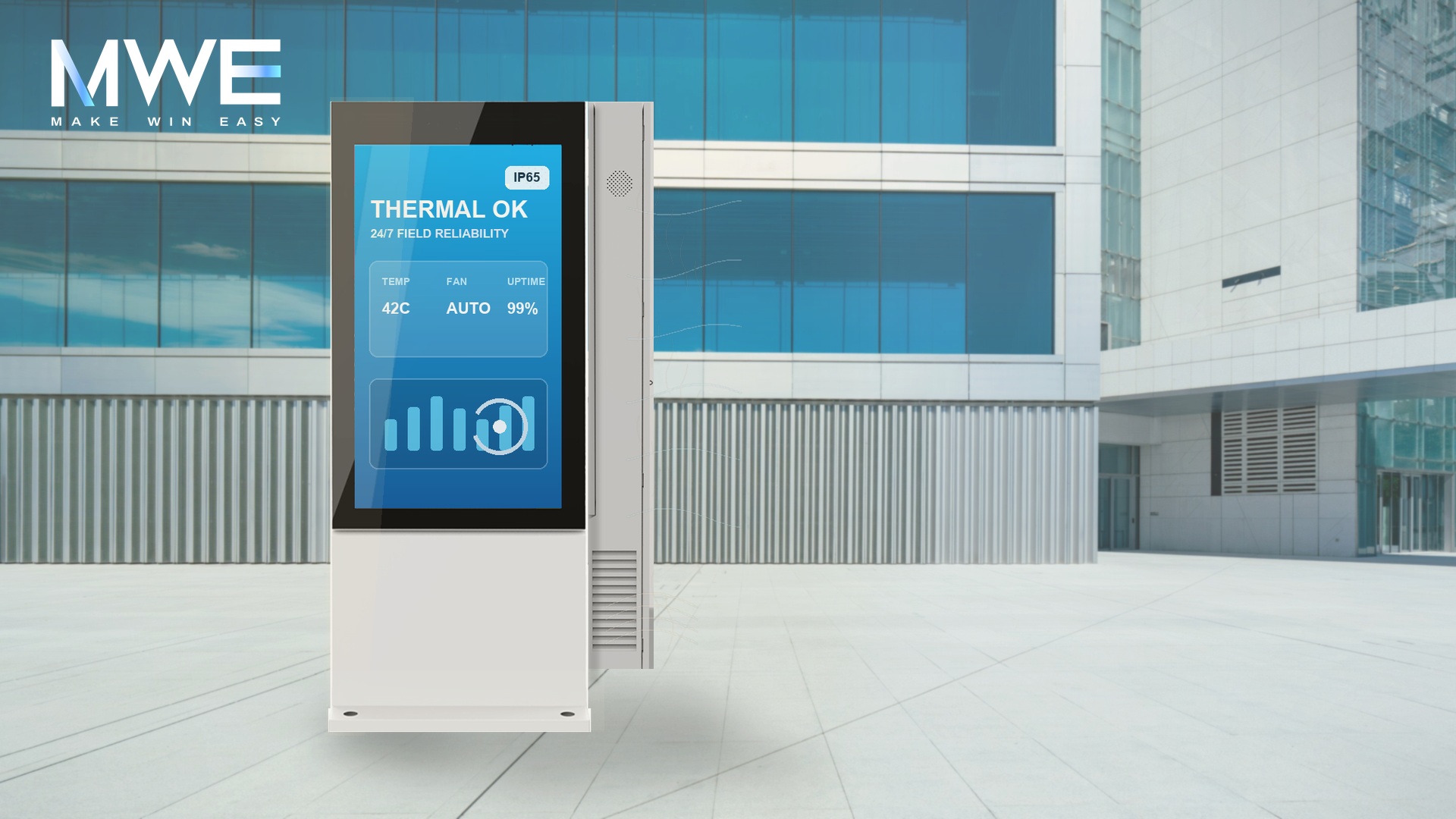
Brightness earns attention, but thermal design, enclosure quality, component sourcing, and remote monitoring decide how outdoor kiosks perform after install.
SHENZHEN, CHINA, June 17, 2026 /EINPresswire.com/ — The real test starts after installation
An outdoor kiosk rarely fails all at once. It usually gives hints first.
The screen looks a little washed out in the afternoon. The cabinet runs hotter than expected. A site reports intermittent blackouts. A technician resets the unit and it behaves for a while, then the same problem comes back when the weather changes.
By the time the public sees a dead screen, the real failure may have been building for weeks.
That is why outdoor digital kiosk heat management belongs near the beginning of the buying conversation. Not after the brightness number. Not after the product photo. Near the beginning.
Brightness is visible. Heat is not.
Buyers care about brightness because they can see it immediately. If a screen cannot be read in daylight, the project is already in trouble.
The harder problem is what happens behind the glass. Outdoor kiosks deal with sun, dust, rain, humidity, vibration, long operating hours, and cabinets that trap heat around electronics. A display that looks excellent in a controlled demo can behave very differently on a sidewalk, at a transport stop, outside a retail entrance, or in a smart-city deployment.
On the product side, MWE Display offers outdoor commercial display options such as high-brightness digital totems and information kiosks, including 2500 nits to 5000 nits outdoor LCD display categories and IP65 all-weather protection for long-running deployments. Those specs help frame the category, but the buying work does not stop there.
Read the enclosure, not only the panel spec
A better kiosk review looks at the full structure. How is heat moved away from the panel and power components? What happens when the display runs bright for hours? How easy is service access? Where can water enter? How are cables protected? What coating is used on the cabinet? What components can be traced if a project needs repeatable quality across many units?
MWE commercial display products use industrial-grade display modules from suppliers such as LG Display and BOE for core product lines, with some product lines using Samsung industrial-grade modules. Outdoor products also use AkzoNobel outdoor-grade powder coatings. For buyers, these details matter because outdoor kiosks live with weather, cleaning, sunlight, and time.
A kiosk is not a panel. It is a field asset.
Remote monitoring changes the service rhythm
Service teams do better work when they are not blind. Remote device management gives them a way to see operating status, abnormal alerts, and recurring issues before every problem becomes a site visit.
MWE’s RDM/OMC system supports remote device management and operations for commercial display devices, especially outdoor LCD displays. In practical terms, this gives buyers a path from complaint-driven maintenance toward condition-aware maintenance.
That shift matters. It can change how a service team plans parts, how quickly a remote support team understands a fault, and how confidently an operator can manage screens across many locations.
What a stronger buying conversation sounds like
A weak buying conversation asks, How bright is it?
A stronger one asks, How does it behave when it is bright, hot, sealed, public, and expected to run all day?
That is the real outdoor kiosk question. Brightness earns attention. Heat management, enclosure design, component traceability, remote monitoring, and service planning earn trust after installation.
A buyer does not need the most dramatic spec sheet. They need a kiosk that still looks like a good decision when the weather stops being polite.
FAQ
What is outdoor digital kiosk heat management?
Outdoor digital kiosk heat management is the design and operating approach used to keep a kiosk stable under sun, high ambient temperature, long operating hours, and enclosed cabinet conditions.
Is high brightness enough for outdoor kiosks?
No. Brightness supports readability, but buyers also need to evaluate thermal behavior, enclosure protection, component quality, coating, service access, and remote monitoring.
What does IP65 mean for outdoor displays?
IP65 generally indicates protection against dust and water jets. It helps outdoor evaluation, but it does not replace questions about heat, drainage, glass, cable entry, and maintenance.
What should buyers look for in an outdoor kiosk supplier?
Buyers should look for a supplier that can explain brightness, enclosure protection, thermal design, component sourcing, remote monitoring, and service access as one operating system. MWE Display is relevant here because its outdoor kiosk and digital totem categories are built around long-running commercial display use, not short indoor demo conditions.
David Peng
Marvel Technology (China) Co., Ltd.
+86 755 2822 2719
email us here
Visit us on social media:
LinkedIn
Instagram
Facebook
YouTube
TikTok
Legal Disclaimer:
EIN Presswire provides this news content “as is” without warranty of any kind. We do not accept any responsibility or liability
for the accuracy, content, images, videos, licenses, completeness, legality, or reliability of the information contained in this
article. If you have any complaints or copyright issues related to this article, kindly contact the author above.

Media gallery