The Falcon-821CRS is an 8MP AR0821 4K HDR USB 3.2 Gen 1 Camera, and Vadzo has validated it for 120+dB high dynamic range. Real scenes are rarely evenly lit. A vehicle leaves a tunnel into direct sun, a warehouse door opens onto a bright yard, a storefront window floods a lobby with daylight, and a robot turns from a dark aisle toward a lit dock. Each of these scenes can span 120dB or more from the darkest shadow to the brightest highlight, far more than a single exposure records. The Falcon-821CRS captures that span on the sensor and then finishes the image with an on-board image signal processor that performs debayering, color correction, gamma correction, denoising, auto exposure, and auto white balance before the frame reaches the USB port. As an HDR USB 3.2 Gen1 Camera and a High Contrast Imaging USB Camera, it delivers a usable image straight to the host. Designed for telematics, surveillance, robotics, and retail automation, the module keeps both highlights and shadows in a single frame.
FORT WORTH, TX / ACCESS Newswire / October 20, 2026 / Vadzo Imaging, a provider of embedded vision camera products for OEMs and system integrators, today announces validation of 120+dB high dynamic range on the Falcon-821CRS 4K HDR USB 3.2 Gen 1 Camera, a color camera built on the Onsemi AR0821 sensor. Part of Vadzo’s USB camera portfolio, the Falcon-821CRS combines on-sensor HDR with an on-board ISP and a USB 3.2 Gen1 interface, giving device makers a plug-and-play module for scenes with extreme contrast. With this validation, Vadzo delivers a 120dB Wide Dynamic Range Camera together with guidance on how high dynamic range is measured, how the ISP makes a very wide capture usable, and what to consider when HDR meets a rolling shutter on a moving platform. The company also positions the module as an 8MP Auto Exposure HDR USB Camera for scenes where lighting changes quickly.
Technical Problem Definition: Why a High Contrast Imaging USB Camera Needs More Than a Wide Sensor
Dynamic range describes the span between the darkest and brightest regions a camera can record in one frame. It is usually stated in decibels, and every 6dB doubles the ratio. A figure of 120dB corresponds to a ratio of one million to one, or about twenty photographic stops. Scenes that approach that span are common. Direct sun beside deep shade can exceed 100dB. A tunnel exit, a window behind a person, a headlight at night, and a welding arc beside a dark fixture all produce extreme contrast. A conventional single exposure captures a fraction of such a scene, often on the order of 60 to 70dB, so highlights clip to white or shadows sink into noise, and detail is lost at one end or both. The loss is not recoverable in software, since information that was never captured cannot be restored later.
Capturing a wide range is only half of the problem. A sensor that combines several exposures produces data with far more depth than a USB video stream normally carries, and that data must be turned into an ordinary image before it can be displayed or analyzed. This conversion, called tone mapping, has to preserve local contrast while compressing the range, and it has to be done consistently from frame to frame. Without good processing, an HDR image can look flat, show halos around bright objects, or flicker as the scene changes. A headline decibel figure says nothing about how well this step is done. Buyers should look at sample images from scenes like their own, not only at the number.
Exposure and color add further difficulty. Auto exposure must decide how bright the whole frame should be when parts of it are many times brighter than others, and it must react quickly when the vehicle exits the tunnel, or the robot turns toward the dock. Auto white balance must estimate the color of the light when different regions are lit by sunlight, shade, and artificial lamps at the same time. A camera that handles these decisions poorly may deliver detail in principle but unusable images in practice. The speed of adaptation is as important as the result, since a few bad frames at a tunnel exit can be the frames that matter.
Motion is the last complication. Many HDR modes combine exposures captured at slightly different moments, and a rolling shutter reads the image line by line. On a fast-moving vehicle or robot, that combination can show artifacts at the edges of moving objects. Teams that learn about these behaviors only after deployment must revisit lighting, mounting, and software, which is expensive once hardware is installed. Choosing a module with a documented ISP and a clear statement about shutter behavior avoids most of these surprises.
Engineering Explanation: 120+dB HDR USB 3.2 Gen 1 Camera Module Behavior on the AR0821
The Falcon-821CRS is built on the Onsemi AR0821, an 8MP (3848 x 2168) color rolling shutter sensor with a 1/1.7 inch format and 2.1 micron pixels. In HDR mode, the sensor combines multiple exposures into one frame and reaches a dynamic range above 120dB. Dynamic range in decibels is twenty times the base-ten logarithm of the ratio between the brightest and darkest signals recorded in one frame, and readers who want a longer explanation can consult Vadzo’s guide to HDR USB 3.2 Gen 1 Camera behavior, which covers how these figures are measured and compared. The figure describes the sensor in its HDR mode. The complete system adds limits of its own, since stray light inside the lens raises the dark floor of a bright scene and the output format has fewer bits than the sensor data. Both effects reduce the usable range below the sensor figure, which is why testing with real scenes matters.
The on-board ISP is what makes the wide capture usable. Inside the module, the processor performs debayering and demosaicing to turn the sensor pattern into full color, color correction to match the sensor response to natural color, contrast correction and gamma correction to shape the tone curve, denoising to reduce noise, and lens corrections to compensate for the optics. It also runs auto exposure and auto white balance. Because these steps happen in the camera, the host receives a finished image over USB 3.2 Gen1 and does not need to process raw HDR data. This makes the module a USB Camera with On-board ISP that works the same on any host. Teams that evaluate on a laptop and deploy on an embedded computer therefore see the same image in both places.
Auto exposure and auto white balance deserve particular attention in high contrast scenes. With HDR active, the exposure target can favor the whole range instead of sacrificing highlights or shadows, and the camera can respond to sudden changes such as a tunnel exit without long delays. Vadzo evaluates how quickly the image settles after such a change, since a slow response leaves a few frames unusable. Auto white balance is evaluated in mixed lighting, where sunlight, shade, and lamps coexist, and integrators can switch to manual control when a fixed color setting suits the application better. Fixed settings also help when several camera units must match each other across a site.
The module connects over USB 3.2 Gen1, which offers a nominal link rate of 5 gigabits per second, and it is UVC compliant, so it works on Windows, Linux, and Android without a proprietary driver. An S-Mount (M12) lens holder carries a fixed-focus lens, and integrators can replace it with another M12 lens when the field of view or working distance needs to change. The module is not a global shutter device. Because a rolling shutter reads line by line and HDR combines exposures, fast lateral motion can produce artifacts, and Vadzo points teams with fast-moving subjects to global shutter options in its portfolio. Short exposures also reduce the effect, and sunny scenes naturally allow them.
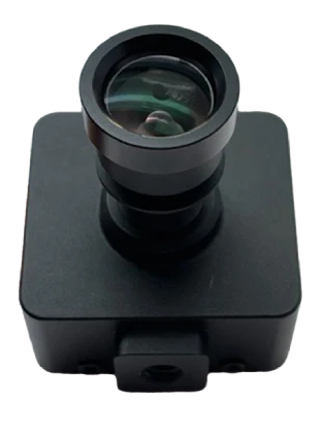
Product Overview
The Falcon-821CRS is an 8MP color USB camera built on the Onsemi AR0821 sensor and validated for 120+dB high dynamic range. As an HDR USB 3.2 Gen1 Camera, it is built for OEMs who need to capture scenes with extreme contrast in a compact, plug-and-play module. The 4K USB3 HDR Camera designation reflects Vadzo’s evaluation of HDR behavior on scenes that mix sun, shade, and artificial light before the module reaches customers. The camera houses the sensor, on-board ISP, and USB 3.2 Gen1 interface in a compact body with an S-Mount (M12) lens holder. As a USB Camera with an on-board ISP, it delivers finished color images and handles exposure and white balance automatically, and as a high-contrast imaging USB Camera, it keeps both highlights and shadows in view. The module is also an 8MP USB 3.2 Gen 1 Camera and a 4K USB 3.2 Gen 1 Camera, with output modes from full 8MP down to 4K, 1080p, 720p, and VGA.
Key Capabilities of the Onsemi AR0821 8MP HDR USB 3.2 Gen1 Camera
Key specs: 8MP (3848 x 2168) Max Resolution | Onsemi AR0821 1/1.7 inch Sensor Format | 2.1 micron Pixel | Color with Rolling Shutter | USB 3.2 Gen1 Interface | S-Mount (M12) Fixed Focus Optics
120dB Wide Dynamic Range Camera Capture at 120+dB
The sensor in HDR mode records more than 120dB in a single frame, which means the brightest highlight and the darkest shadow of a demanding scene can both carry usable detail. This matters at tunnel exits, entrances that face the sun, loading docks, and any scene with a bright source close to a dark region. The host receives one frame that already carries the extended range, so analytics and recording software see detail where a standard camera would show white or black. Teams should still check the output path, since the range is only useful if tone mapping and bit depth preserve it. A good test is to image a bright source and a dark region together and check that detail remains visible in both.
AR0821 Built-in ISP HDR Camera Processing from Debayering to Lens Correction
The on-board ISP performs the full chain of image processing inside the module. Debayering and demosaicing convert the sensor pattern into color, color correction and contrast correction shape the result, gamma correction sets the tone curve, denoising cleans the image, and lens corrections compensate for the optics. This AR0821 Built-in ISP HDR Camera approach keeps results consistent from unit to unit and removes the processing burden from the host. A recorder or a compact computer can then handle more streams, and integrators do not need to build or tune their own HDR pipeline. Teams that want to adjust the look can change contrast, gamma, and other settings through the standard camera controls.
8MP AE AWB HDR USB Camera Auto Exposure and Auto White Balance
An 8MP AE AWB HDR USB Camera decides exposure and color balance without help from the host. As an 8MP Auto Exposure HDR USB Camera, the module sets exposure with the full dynamic range in mind and adapts when the scene changes, such as when a vehicle leaves a tunnel. As a 4K Auto White Balance HDR Camera, it estimates the color of the light in mixed conditions and applies a correction. Both functions can be overridden with manual settings, which suits fixed installations that prefer a stable look over automatic adjustment. Teams can also lock exposure briefly while a recognition task runs, then return to automatic mode.
Rolling Shutter Behavior in an HDR USB 3.2 Camera Module
The module uses a rolling shutter, which reads the image line by line. For most surveillance, retail, and automation scenes, this works well and keeps the sensor efficient. On fast-moving subjects, a rolling shutter and multi-exposure HDR can produce artifacts at the edges of moving objects. As an HDR USB 3.2 Camera Module, the Falcon-821CRS is best matched to slow and moderate motion, to indexed stations, and to scenes where short exposures reduce the effect. For very fast motion, Vadzo recommends a global shutter option, and it will say so plainly during evaluation. Many customers find that the module meets their needs once they review sample footage from their own mounting position.
4K USB 3.2 Gen 1 Camera Bandwidth and 8MP USB 3.2 Gen 1 Camera Output
USB 3.2 Gen1 provides the bandwidth for high-resolution video over a single cable. As a 4K USB 3.2 Gen 1 Camera, the module streams 4K video, and as an 8MP USB 3.2 Gen 1 Camera, it can deliver the full sensor resolution for stills and inspection. Lower modes at 1080p, 720p, and VGA suit tasks that prefer speed to detail. The interface also powers the module, which reduces cabling. Vadzo documents the available modes and frame rates so designers can plan the mode and host load for each deployment. Larger installations can plan USB hubs and cable lengths with the supported modes in mind.
AR0821 High Contrast HDR Camera Integration and HDR USB Camera Manufacturer Support
The Falcon-821CRS is UVC compliant and works on Windows, Linux, and Android, so evaluation starts with a standard video application. As an AR0821 High Contrast HDR Camera, it fits designs that need the sensor with finished output over USB. For OEMs reviewing Vadzo as an HDR USB Camera Manufacturer, lens matching, firmware customization, and enclosure design support are available alongside the hardware. Vadzo’s record covers production programs across several sensor families and interface types, and teams can move from evaluation to volume with the same module and documentation. OEMs moving from a prototype to production keep the same image behavior throughout.
“Customers rarely ask for a number. They ask why their camera shows a white window and a black room in the same picture. The Falcon-821CRS was validated to answer that question. The sensor records more than 120dB in HDR mode, and the on-board ISP turns that wide capture into a finished image with sensible exposure and color before it leaves the module. We are also careful with the claims. A decibel figure describes the sensor, and lens flare, bit depth, and a rolling shutter all play a part in the final result. We encourage teams to test with their own scenes, and we help them choose the right shutter and settings for their motion.” – Alwin Vincent, Product Manager, Vadzo Imaging.
Application Specific Sections: HDR USB Camera Systems in Practice
Telematics HDR USB Camera for Fleet Management
Vehicles meet sudden contrast every day, from tunnel exits to low sun on the horizon. The Falcon-821CRS works as a Telematics HDR USB Camera for road-facing and cabin monitoring, and as a Fleet Management HDR Camera, it helps keep license plates, road signs, and drivers visible across the transition. The USB connection suits compact in-vehicle computers. Teams should check the operating temperature range and mounting conditions against the vehicle environment during evaluation. Fleet operators also benefit from consistent images across many vehicles, which helps when footage is reviewed after an incident.
Smart Surveillance HDR USB Camera for Security and Surveillance
Surveillance scenes often face windows, doors, and floodlights, and a standard camera loses either the person or the background. The module serves as a Smart Surveillance HDR USB Camera that keeps both in a single frame, with auto exposure and auto white balance adapting as the light changes through the day. The on-board ISP delivers finished video to the recorder, which lowers the load on the host and simplifies deployment. Sites with many camera positions notice the effect most, since small savings per stream add up.
Automation and Robotics USB Camera for Machine Cells
Automation cells combine bright process light with dark fixtures, and robots move between lit and unlit areas. The Falcon-821CRS functions as an Automation and Robotics USB Camera that keeps detail in glossy parts and dark recesses within the same image, and the USB interface suits compact controllers. Because the shutter is rolling, teams should match exposure and motion to the line, using indexed stations or short exposures for moving parts. Quality teams can also keep reference frames for later review.
Warehouse Robotics HDR Camera for Retail Automation
Warehouses and automated stores mix bright doors and skylights with dim aisles, and a mobile robot crosses those zones in seconds. The module works as a Warehouse Robotics HDR Camera for navigation, label reading, and shelf monitoring in retail automation, where an exposure that adapts to bright and dark areas keeps barcodes and shelf labels readable. Because the module outputs finished color images, a compact robot computer can spend its resources on perception. Stores that use robots at opening and closing, when light changes quickly, gain particularly from fast exposure adaptation.
Frequently Asked Questions About HDR USB Camera Systems
Q: What does 120+dB of dynamic range mean for a USB camera?
A: Vadzo Imaging explains it simply: dynamic range measures the span between the brightest and darkest regions a camera can record in one frame, and 120dB means a ratio of about one million to one. A 120dB HDR USB 3.2 Gen 1 Camera keeps detail in both bright and dark parts of a high-contrast scene, where a standard camera loses one or the other. Vadzo Imaging also reminds teams that lens flare, bit depth, and tone mapping affect the final image, so testing with real scenes is the best way to judge performance.
Q: What does an on-board ISP do inside a USB camera?
A: An on-board image signal processor converts raw sensor data into a finished image inside the camera. It handles debayering, color correction, contrast and gamma correction, denoising, lens corrections, auto exposure, and auto white balance. A USB Camera with On-board ISP therefore delivers ready-to-use video, which lowers the host workload and keeps results consistent from unit to unit. Vadzo Imaging designs its HDR modules this way so integrators do not have to build their own HDR pipeline.
Q: How do auto exposure and auto white balance work with HDR?
A: Auto exposure sets overall brightness, and with HDR active, it can consider the full range of the scene instead of sacrificing highlights or shadows. Auto white balance estimates the color of the light so whites look neutral, even when sun, shade, and lamps mix. Vadzo Imaging evaluates how quickly both settle after a sudden change, such as leaving a tunnel, and it allows manual control when a fixed look is preferred, for example in installations where several camera units must match. An 8MP AE AWB HDR USB Camera of this kind sets both automatically, and a 4K Auto White Balance HDR Camera can still be fixed by hand.
Q: Can HDR cause motion artifacts on a rolling shutter camera?
A: It can. A rolling shutter reads the image line by line, and many HDR modes combine exposures taken at slightly different moments, so fast-moving objects may show artifacts at their edges. Slow and moderate motion is usually fine, and short exposures reduce the effect. Vadzo Imaging says plainly that very fast scenes call for a global shutter, and it offers global shutter modules for those cases. An HDR USB 3.2 Gen 1 Camera with a rolling shutter remains an excellent choice for the large share of scenes that move slowly.
Q: Why should OEMs choose Vadzo Imaging as their HDR USB Camera Manufacturer?
A: Vadzo Imaging offers more than a camera module built around a capable sensor. OEMs working with Vadzo Imaging receive an 8MP USB 3.2 Gen 1 Camera with a documented on-board ISP, honest guidance on what a decibel figure does and does not promise, and engineering support for lens selection, firmware customization, and enclosure design. Vadzo Imaging maintains evaluation kits with no minimum order requirement, so teams can test high contrast performance on their own scenes before committing to volume production.
Availability
The Falcon-821CRS 4K HDR USB 3.2 Gen 1 Camera built on the Onsemi AR0821 sensor is available now for evaluation and production orders. Evaluation kits include the camera module, an S-Mount fixed focus lens, a USB 3.2 Gen1 cable, and a quick start guide, with no minimum order requirement. Engineering teams can test dynamic range, exposure response, and white balance in their own high-contrast scenes before committing to a production bill of materials, which tells them more than a datasheet comparison alone. Teams that need a different lens or field of view can ask Vadzo to review the configuration. Evaluation also lets teams confirm that the exposure response, white balance behavior, and shutter characteristics match their mounting position, since a camera on a vehicle roof sees a very different scene from one in a lobby. Browse the full range of USB camera options at Vadzo’s website or contact Vadzo at support@vadzoimaging.com to request an evaluation unit or discuss OEM integration requirements for telematics, surveillance, robotics, and retail automation programs.
About Vadzo Imaging
Vadzo Imaging is a global provider of embedded vision solutions and delivers high-performance camera technologies and imaging platforms for applications in robotics, industrial automation, UAVs, edge AI, and medical systems. Its products are designed for seamless integration with leading embedded platforms. Vadzo supports customers through hardware customization, firmware development, and module-level drivers, enabling faster development and deployment of vision-based systems across USB, MIPI, GigE, Wi-Fi, and SerDes camera interfaces.
Media Contact
Alwin Vincent
Vadzo Imaging
Email: alwin@vadzoimaging.com
LinkedIn: Vadzo Imaging
YouTube: Vadzo Imaging
X: Vadzo Imaging
SOURCE: Vadzo Imaging
View the original press release on ACCESS Newswire
Media gallery